
Fragrance in Skincare: The Case For and Against Scented Products

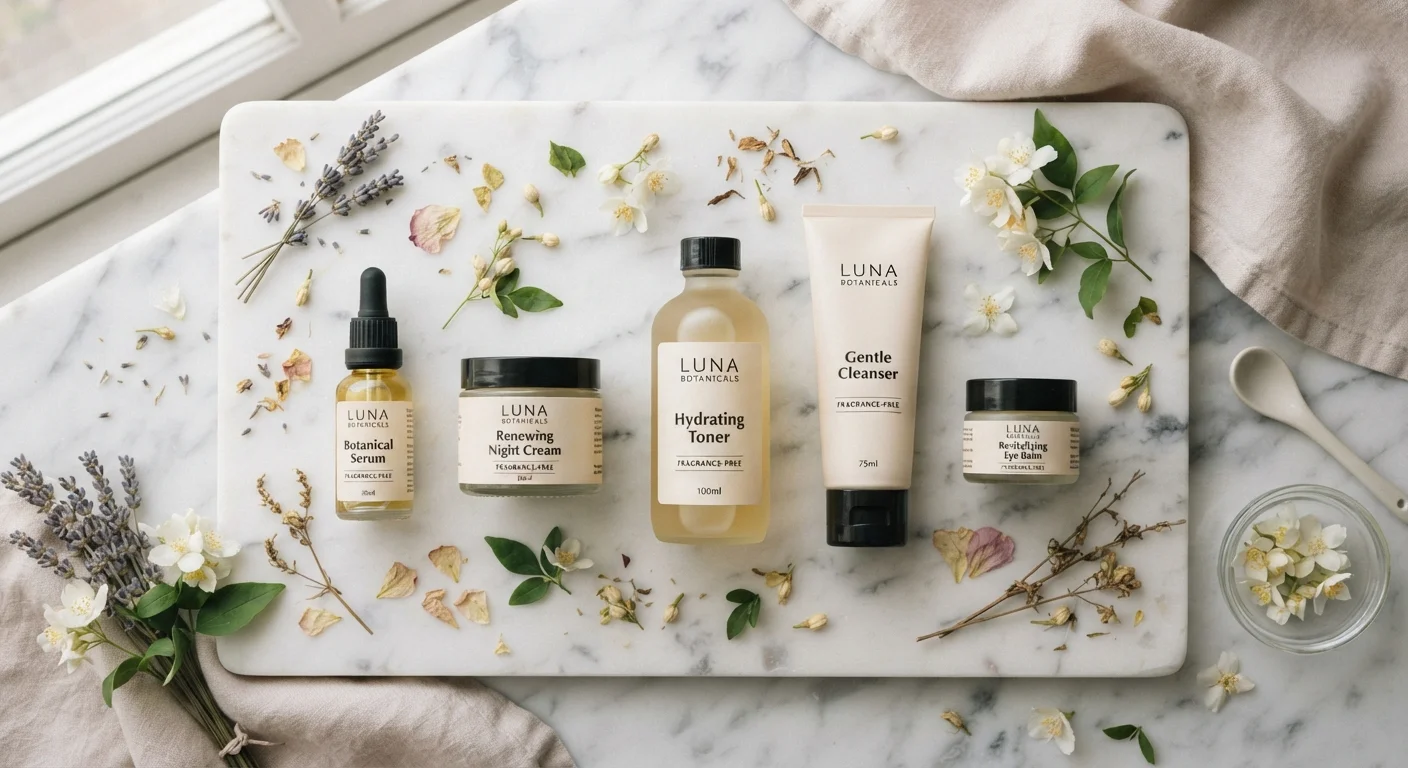
Photo: InDepthReads.com | Streamlining Learning For All editorial
Key Takeaways
- Fragrance is one of the most common causes of allergic contact dermatitis from skincare products.
- Scented products can genuinely enhance the sensory experience and support routine consistency for some users.
- Sensitive skin, rosacea, and eczema-prone skin types are most at risk from fragranced formulas.
- Both natural and synthetic fragrances carry irritation risk — 'natural' does not automatically mean safer.
- Patch testing and ingredient-list awareness are your best tools for navigating fragranced skincare.
Enhances sensory experience and routine enjoyment
A pleasant scent can transform a functional skincare step into a small daily ritual, improving mood and mindfulness around self-care.
Supports habit formation and consistency
Sensory reward is a recognized motivator for routine adherence — the more enjoyable a product feels, the more reliably people use it.
Some botanical fragrance components have minor functional benefits
Certain plant-derived fragrance materials contain compounds with mild antioxidant properties, though their impact at cosmetic concentrations is typically limited.
Signals freshness and formula quality to many consumers
For a significant portion of consumers, a product's scent contributes to confidence in its quality and freshness, influencing overall satisfaction.
Leading cause of allergic contact dermatitis
Fragrance is consistently ranked among the top allergens in dermatology patch-test studies, capable of triggering immune-mediated skin reactions in sensitized individuals.
Ingredients hidden behind a single label term
U.S. labeling rules allow 'fragrance' to mask a complex blend of compounds, making it nearly impossible for consumers to identify specific triggers without professional patch testing.
Sensitization can develop after years of use
The immune system can become sensitized over repeated exposures, meaning a long-tolerated product can unexpectedly begin causing reactions.
'Natural' fragrance is not automatically safer
Essential oils and botanical extracts contain naturally occurring allergens — including linalool and limonene — that can irritate skin just as synthetic compounds do.
Particularly risky for compromised or reactive skin
A damaged skin barrier allows deeper penetration of fragrance compounds, amplifying both the irritant and allergenic potential significantly.
What Counts as 'Fragrance' in Skincare?
On a U.S. ingredient label, the word fragrance (or parfum) can legally represent a blend of dozens — sometimes hundreds — of individual chemical compounds. Manufacturers are not required to disclose the specific components of a fragrance blend, which makes it one of the harder ingredients to evaluate. This regulatory loophole, maintained in part to protect proprietary formulas, is why fragrance sits at the center of so much dermatology debate.
Fragrance ingredients fall into two broad camps: synthetic compounds created in a lab, and naturally derived materials like essential oils, botanical extracts, or resins. Both categories contain known allergens and potential irritants — a point worth noting for anyone who assumes that 'natural' automatically means gentler.
If you're just building out your routine, our beginner's skincare guide is a good place to start before navigating ingredient labels.
Fragrance-Free vs. Unscented: Not the Same
The Case For: Why Fragrance Has a Place in Skincare
The skincare industry doesn't add fragrance simply to smell nice — though that matters too. Here's what the pro side of the argument actually looks like:
Enhances sensory experience and routine enjoyment
A pleasant scent can transform a functional skincare step into a small daily ritual, improving mood and mindfulness around self-care.
Supports habit formation and consistency
Sensory reward is a recognized motivator for routine adherence — the more enjoyable a product feels, the more reliably people use it.
Some botanical fragrance components have minor functional benefits
Certain plant-derived fragrance materials contain compounds with mild antioxidant properties, though their impact at cosmetic concentrations is typically limited.
Signals freshness and formula quality to many consumers
For a significant portion of consumers, a product's scent contributes to confidence in its quality and freshness, influencing overall satisfaction.
Research in sensory psychology consistently shows that pleasant scent enhances perceived product efficacy and promotes routine adherence. In other words, if your moisturizer smells like something you enjoy, you're more likely to use it every day. For a habit-driven practice like skincare, that consistency has real value.
Some naturally derived fragrance components — like certain terpenes found in plant extracts — may carry minor antioxidant or antimicrobial properties, though these effects are typically modest at cosmetic concentrations.
The Case Against: The Real Risks of Fragrance
The concerns around fragrance are well-documented and shouldn't be dismissed as overcaution:
Leading cause of allergic contact dermatitis
Fragrance is consistently ranked among the top allergens in dermatology patch-test studies, capable of triggering immune-mediated skin reactions in sensitized individuals.
Ingredients hidden behind a single label term
U.S. labeling rules allow 'fragrance' to mask a complex blend of compounds, making it nearly impossible for consumers to identify specific triggers without professional patch testing.
Sensitization can develop after years of use
The immune system can become sensitized over repeated exposures, meaning a long-tolerated product can unexpectedly begin causing reactions.
'Natural' fragrance is not automatically safer
Essential oils and botanical extracts contain naturally occurring allergens — including linalool and limonene — that can irritate skin just as synthetic compounds do.
Particularly risky for compromised or reactive skin
A damaged skin barrier allows deeper penetration of fragrance compounds, amplifying both the irritant and allergenic potential significantly.
Dermatologists consistently identify fragrance as a leading trigger of allergic contact dermatitis — an immune-mediated skin reaction that can cause redness, itching, swelling, and chronic sensitivity. The European Scientific Committee on Consumer Safety maintains a list of over 80 fragrance allergens requiring label disclosure above certain concentrations, reflecting the breadth of the issue.
Critically, fragrance reactions can develop over time. A product you've used for years without issue can suddenly cause a reaction if your immune system becomes sensitized — which is why a clean history with scented products doesn't guarantee permanent tolerance.
~1 in 10
People affected by fragrance allergy
Estimates from dermatology and contact allergy research suggest roughly 1 in 10 people has some degree of fragrance sensitivity, though rates vary across studies.
80+
Fragrance allergens on EU regulatory lists
The European Scientific Committee on Consumer Safety has identified over 80 individual fragrance substances warranting mandatory label disclosure above defined concentrations.
For those building a minimal, effective routine, minimalist skincare approaches often favor fragrance-free formulas by design.
Who Should Be Most Cautious
Not every skin type carries equal risk. The following groups have the clearest reason to prioritize fragrance-free options:
- Sensitive or reactive skin: A compromised barrier is more permeable to irritants, making reactions more likely and more intense.
- Rosacea and eczema: Both conditions involve chronic inflammation that fragrance can exacerbate significantly.
- Around the eyes: The skin here is thinner and more delicate — any fragranced product used near this zone carries higher irritation risk.
- Post-procedure skin: After chemical peels, microneedling, or laser treatments, the barrier is temporarily disrupted and highly vulnerable.
If you're layering multiple products, pay attention to how fragrance compounds across steps — cumulative exposure adds up. The right product-layering order can also influence how deeply ingredients — including fragrance compounds — penetrate.
Making a Practical Decision
The goal isn't fear — it's informed choice. A few practical approaches help most people navigate this effectively:
- Patch test new products: Apply a small amount to your inner arm or behind your ear for several days before full-face use.
- Read the ingredient list placement: Fragrance listed near the end of a formula is present in lower concentrations than when it appears near the top.
- Watch for specific allergens: Common sensitizers include linalool, limonene, geraniol, and eugenol — all found in both natural and synthetic fragrance blends.
- Go fragrance-free in targeted areas: Even if you tolerate scented products elsewhere, consider fragrance-free formulas for eye creams and leave-on treatments.
This article is for informational purposes only and does not constitute medical or dermatological advice. If you experience a persistent skin reaction, consult a board-certified dermatologist.
The content on this site is for informational purposes only and is not a substitute for professional advice. Always consult a qualified professional for guidance specific to your situation.