
Style Myths That Keep People Stuck in Boring Outfits

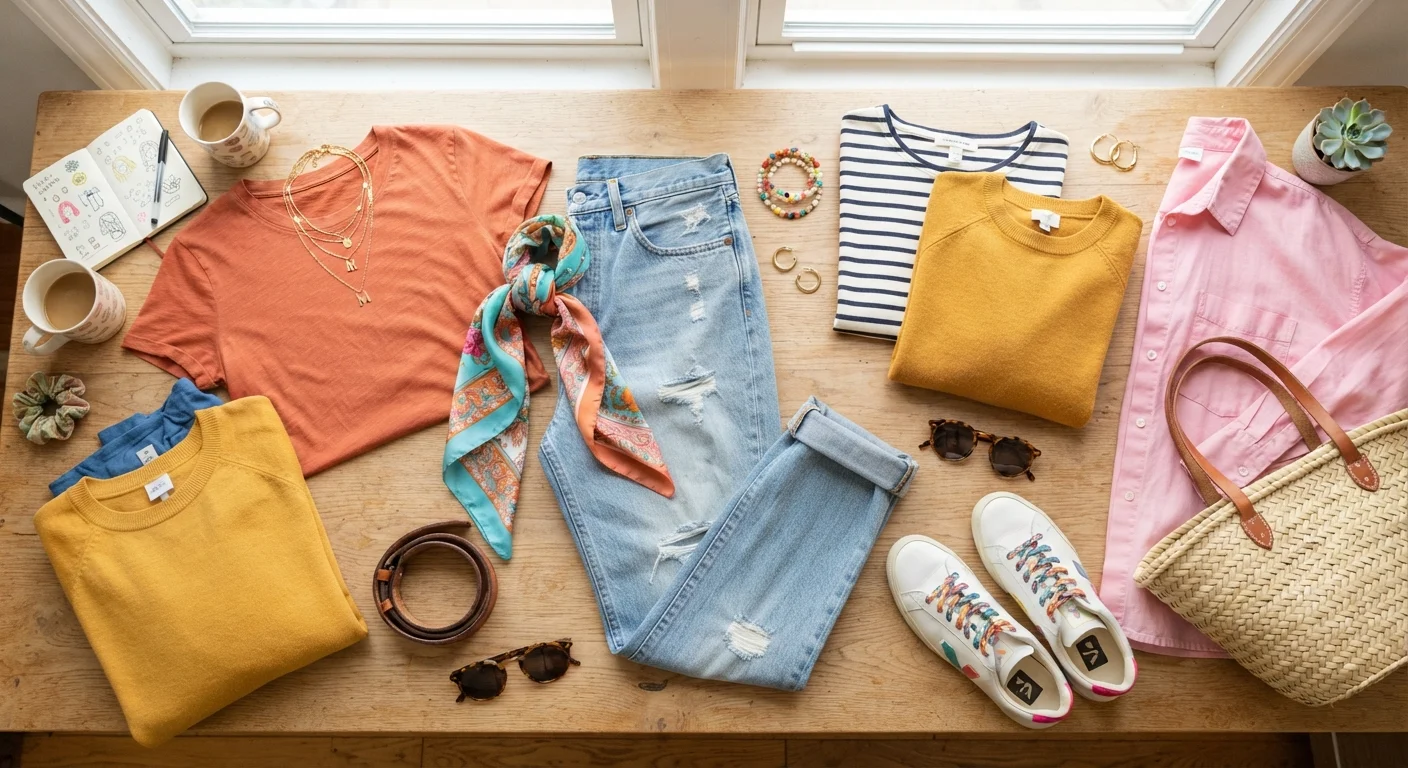
Photo: InDepthReads.com | Streamlining Learning For All editorial
Key Takeaways
- Most rigid style rules are outdated opinions dressed up as universal truth.
- Fit and confidence matter far more than age, body type, or color season.
- Personal style is built through experimentation, not rule-following.
- A smaller, intentional wardrobe often creates more outfit options than a packed closet.
- Mixing patterns, colors, and proportions can absolutely work — context and balance are the real guides.
Why Style Rules Do More Harm Than Good
Somewhere between fashion magazines and well-meaning family advice, a set of style rules lodged themselves into our collective consciousness. "Don't wear horizontal stripes." "Black and navy never mix." "Dress your age." The problem? Most of these rules weren't handed down from some governing fashion authority — they were opinions that got repeated until they felt like facts.
The result: millions of people stuck wearing outfits that feel safe but boring, passing over pieces they genuinely love because an invisible rulebook told them not to. If any of that sounds familiar, you're not alone — and you're definitely not stuck. Before you refresh your closet, it helps to clear out the myths cluttering your mental space first. A wardrobe audit is a great next step once you've freed yourself from these mental blocks.
Myth
You should dress your age — certain styles are simply "too young" or "too old" for you.
Fact
Age is not a style guideline. Dressing in a way that feels authentic to you has no expiration date.
This myth implies that style has a biological clock, which it simply doesn't. The concept of "age-appropriate" dressing has shifted dramatically over decades, and what felt edgy or youthful in one era often becomes mainstream in the next. What genuinely matters is whether a piece fits well, suits the occasion, and makes you feel good. Those criteria apply equally at 25, 45, and 65.
Myth
Only certain colors look good on you based on your skin tone or "color season."
Fact
While some shades may be more flattering near your face, there are no colors you are categorically forbidden to wear.
Color analysis frameworks can be fun to explore, but they were never meant to be hard rules. Saturation, placement, and how a color is styled all affect the result. A color that feels harsh right next to your face might work beautifully as a trouser or shoe. Experimenting with how you position color in an outfit — rather than avoiding it entirely — opens up far more options. See how pattern mixing extends the same principle: context shapes everything.
Myth
Horizontal stripes make you look wider, so larger bodies should avoid them.
Fact
Research on the so-called "Helmholtz illusion" in clothing is more nuanced than the rule suggests — stripe width, spacing, and contrast all play a role.
The idea that horizontal stripes universally add visual width has been repeated so often it feels like physics. In practice, the effect depends heavily on stripe width, contrast level, and body proportion. Some studies on optical illusions in clothing context suggest thinner, closer-set stripes can actually create a different visual effect than bold, widely spaced ones. The real takeaway: try the stripe, assess it on your body, in good lighting, and trust what you see over what you've been told.
Myth
You need a large wardrobe to have good style and plenty of outfit options.
Fact
A smaller, intentional wardrobe of pieces that genuinely work together typically yields more usable outfit combinations than a packed closet of disconnected items.
More clothes doesn't mean more outfits — it often means more decision fatigue and more items that don't coordinate with anything else. Style researchers and wardrobe consultants consistently note that versatility comes from cohesion, not volume. When pieces share a color story or work across multiple contexts, the number of combinations multiplies quickly. If your closet feels overwhelming but your outfit options feel limited, that's a strong signal it's time to audit what you actually wear.
Myth
Black and navy should never be worn together — they clash.
Fact
Black and navy is a widely used combination in contemporary fashion and generally reads as intentional when the pieces are well-fitted.
This rule likely originated from an era when matching was considered the gold standard and subtle tonal differences were thought to look like mistakes. Today, tone-on-tone and near-neutral combinations are common across everyday and professional dressing alike. The key is intention: choose pieces with a clear contrast in texture or cut so the pairing looks deliberate rather than accidental. If your outfits still feel like they're missing something, common styling missteps might be the more useful thing to examine.
Myth
Dressing for your body shape means minimizing certain features and emphasizing others.
Fact
Dressing for your body is most useful when it's about comfort and confidence — not concealment.
Body-shape dressing advice has traditionally been framed around "problem areas" to hide and "assets" to highlight — language that implies your body is a puzzle to be solved. A more useful frame: what silhouettes feel comfortable, what proportions you personally enjoy, and what makes you feel ready to walk out the door. Our explainer on dressing for your body shape digs into which parts of this advice are genuinely helpful and which are worth discarding.
Building Confidence After Ditching the Rules
Letting go of style myths doesn't mean anything goes — it means you get to decide what goes. Personal style develops through low-stakes experimentation: trying something new, seeing how it makes you feel, and adjusting from there. That process works best when your wardrobe has a solid foundation.
Think about the balance between versatile everyday pieces and a few bolder choices. As explored in our piece on statement pieces vs. wardrobe basics, neither extreme serves most people well — it's the combination that creates real flexibility.
Don't Let "Rules" Drive Impulsive Purchases
And if your outfits still feel a bit "off" even after rethinking the rules, it's often a fit issue rather than a style one. The role of fit matters enormously — a well-fitted piece in a basic cut almost always outperforms an ill-fitting "perfect" item. Small tailoring adjustments can be surprisingly affordable and genuinely transformative.
For the finishing touches, don't overlook the power of accessories — explored in our guide to accessorizing without overthinking it. A single addition can shift an entire outfit's feel without requiring a new wardrobe.
This article is for general informational and entertainment purposes only and does not constitute professional styling or purchasing advice. Individual results vary based on personal preferences, body type, and lifestyle.
The content on this site is for informational purposes only and is not a substitute for professional advice. Always consult a qualified professional for guidance specific to your situation.