
Statement Pieces vs. Wardrobe Basics: Finding the Right Balance

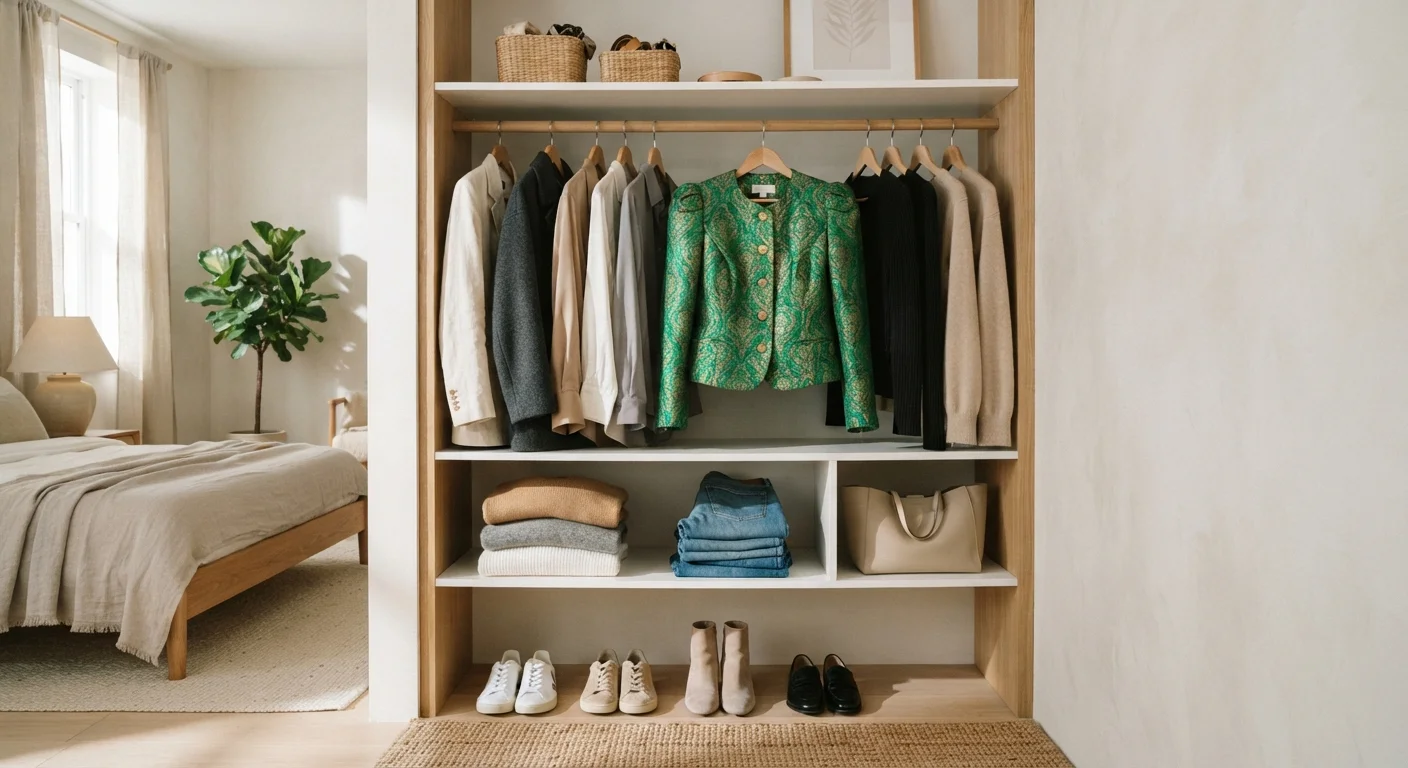
Photo: InDepthReads.com | Streamlining Learning For All editorial
Key Takeaways
- Wardrobe basics form the foundation that makes statement pieces actually wearable day-to-day.
- Statement pieces add personality but lose impact when they can't pair with what you already own.
- A rough 70/30 split — basics to statement pieces — works well for most everyday wardrobes.
- Your lifestyle, budget, and how often you do laundry all shape which ratio makes sense for you.
- Neither approach is wrong; the goal is a closet that feels like yours and functions without stress.
What We Mean by Basics and Statement Pieces
Before comparing the two, it helps to define them clearly — because "basic" often gets a bad reputation it doesn't deserve, and "statement" can feel intimidating when it doesn't need to be.
Wardrobe basics are versatile, relatively neutral items that pair easily with many things you already own: a well-fitting white or black tee, dark jeans, a tailored blazer, a simple crewneck sweater. Their power lies in flexibility — they ask very little of you and give back a lot of outfit combinations. The capsule wardrobe concept is built almost entirely on this logic.
Statement pieces, by contrast, are items that visibly express personality — a printed midi skirt, a brightly colored coat, bold patterned trousers, or a textured top that draws the eye. They carry energy and can transform an otherwise plain outfit. But they tend to pair with fewer things, and wearing them repeatedly can feel more noticeable to the wearer, even if no one else is counting.
Neither category is superior. The tension between them is really a question of proportion and purpose.
The Real-World Trade-Offs
| Wardrobe Basics | Statement Pieces | |
|---|---|---|
| Versatility | Pairs with almost everything | Pairs with fewer items |
| Cost per wear | Typically higher value over time | Depends heavily on how often worn |
| Getting dressed ease | Low effort, reduces decision fatigue | Requires more intentional styling |
| Personal expression | Subtle; relies on fit and quality | Strong; communicates personality clearly |
| Risk of boredom | Can feel repetitive over time | Keeps outfits feeling fresh |
| Best starting point | Yes — build foundation first | Better added once basics are in place |
The comparison above reflects practical realities rather than style judgments. Basics reduce decision fatigue — which research in behavioral psychology suggests is a real drain on daily mental energy — while statement pieces require slightly more intentional styling to land well. Cost per wear is worth thinking about too: a versatile basic worn three times a week for two years delivers significantly more value than a statement piece worn once a month, even if the sticker prices are similar. That said, where you shop for either type plays a big role in the actual cost equation.
Test a Statement Piece Before Committing
How to Find Your Own Balance
The 70/30 rule — roughly 70% basics, 30% statement pieces — is a useful starting framework, not a law. What matters more is whether your closet actually reflects how you live. A person who works from home and attends occasional social events needs a different ratio than someone navigating a creative office environment five days a week.
A few questions worth asking yourself:
- How often do I actually reach for bold pieces? If statement items are hanging untouched, your ratio may be off. A wardrobe audit can surface this quickly.
- Do my statement pieces pair with at least two or three basics? If an item only works in one narrow context, it's more of a costume than a wardrobe piece.
- Am I bored or overwhelmed? Boredom often signals too few statement pieces; overwhelm — too many items that don't work together — often signals not enough basics.
Accessories are also a lower-commitment way to add interest without disrupting your foundation. Thoughtful accessorizing can do a lot of the personality work that a statement garment might otherwise handle.
Building Toward a Closet That Actually Works
If you're starting from a place of wardrobe uncertainty, the most reliable move is to solidify your basics first. Gaps in your foundation make everything else harder — statement pieces included. Once you have reliable go-to items for your most common situations (work, errands, casual socializing), you'll find it much easier to identify which statement pieces would genuinely get used versus which ones just look exciting in the moment.
From there, bring in statement pieces deliberately. One at a time, ideally, so you can test whether they actually integrate into how you get dressed. If a piece sits unworn after a few weeks, that's useful information — not a failure, just feedback. For more on this approach, building your everyday wardrobe from scratch walks through the process step by step.
It's also worth noting that what reads as a "statement" is personal. A bold color that feels daring to one person is a comfort zone for another. The goal isn't to match anyone else's wardrobe philosophy — it's to build one that feels like yours and makes getting dressed something you look forward to rather than dread.
The content on this site is for informational purposes only and is not a substitute for professional advice. Always consult a qualified professional for guidance specific to your situation.