
The Capsule Wardrobe Explained: Why Fewer Clothes Can Mean More Options

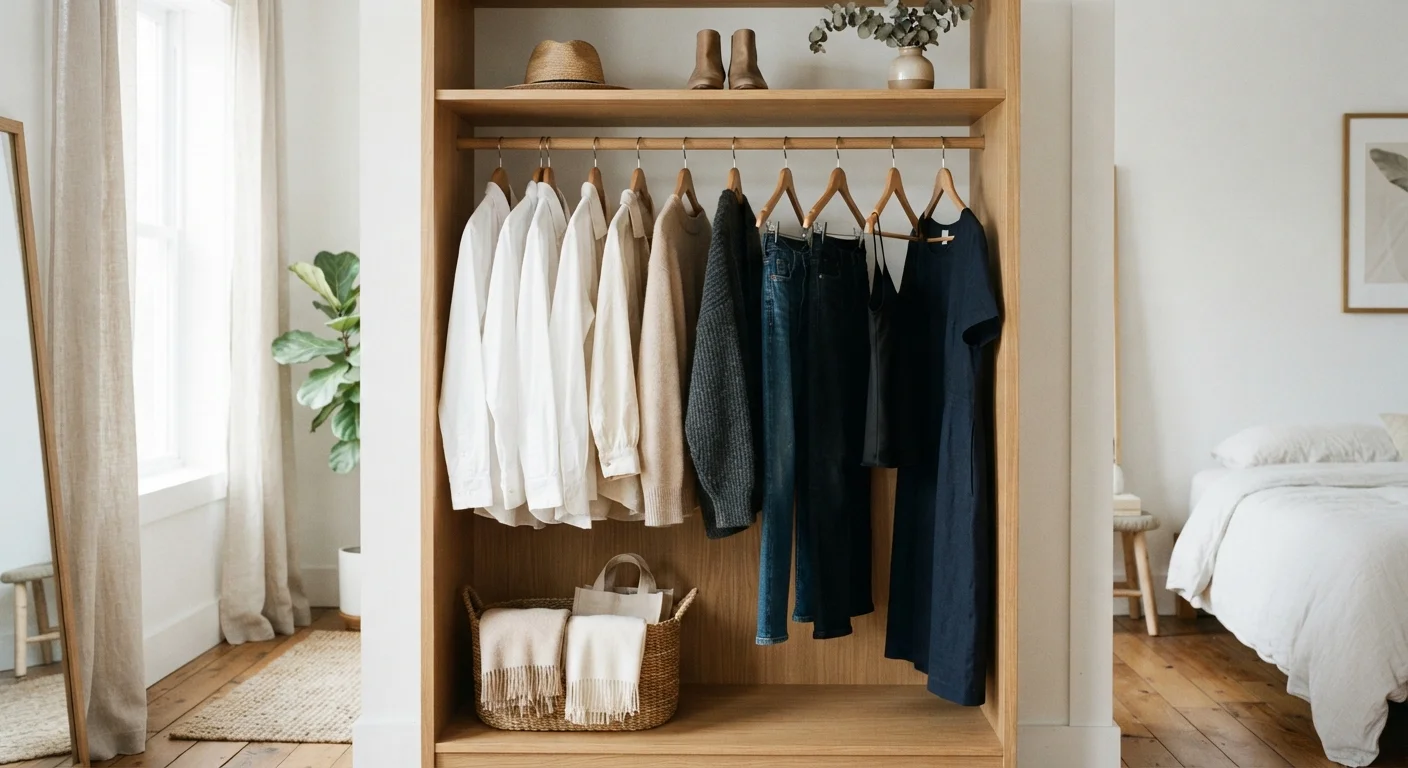
Photo: InDepthReads.com | Streamlining Learning For All editorial
Key Takeaways
- A capsule wardrobe uses fewer, more versatile pieces to create a greater number of outfit combinations.
- It reduces daily decision fatigue by making "what to wear" a simpler, faster choice.
- Capsule wardrobes work at any budget — the focus is intentionality, not expensive clothing.
- Starting with a wardrobe audit helps you identify what you already own and actually wear.
- Neutral base colors and well-fitting staples are the foundation of any successful capsule wardrobe.
The Problem a Capsule Wardrobe Solves
Most of us have experienced it: a closet stuffed with clothes and the nagging feeling that there's nothing to wear. This frustrating paradox happens when a wardrobe grows through impulse buys and trend-chasing rather than intention. Individual items pile up that don't coordinate with anything else, leaving you with lots of clothes but very few workable outfits.
A capsule wardrobe flips that dynamic. Instead of accumulating more, you curate smarter — choosing pieces specifically because they layer, mix, and match across multiple combinations. The math works surprisingly well: ten pieces that each coordinate with five others produce far more outfits than thirty items that barely connect.
Start With What You Already Own
Before you rethink your closet from scratch, it's worth understanding what you're starting with. Our wardrobe audit guide walks you through a practical checklist to see what you actually wear.
What Makes a Capsule Wardrobe Work
The secret is in the selection criteria. Every piece in a capsule wardrobe earns its spot by being genuinely useful — ideally wearable across multiple occasions, seasons, or dress codes. A few principles guide the process:
- Neutral base colors: Shades like navy, white, grey, camel, and black tend to mix easily and form the backbone of most capsules.
- Consistent fit: Clothes that fit well look polished regardless of price point. Fit matters more than the label — a well-fitted affordable piece beats an ill-fitting expensive one every time.
- Lifestyle alignment: Your capsule should reflect how you actually spend your days, not an aspirational version of your life.
- Intentional accents: Statement pieces and accessories can add personality without disrupting the mix-and-match logic. See how to balance basics with statement pieces for practical guidance.
~30%
Clothes worn regularly from the average wardrobe
Research and consumer surveys consistently suggest most people regularly wear only a fraction of the clothes they own, leaving the majority rarely or never touched.
37
Average outfit combinations from 10 core pieces
Style educators commonly illustrate that 10 well-chosen, mix-and-match pieces can theoretically produce over 30 distinct outfit combinations.
Building Your Own Capsule, Step by Step
Getting started doesn't require a complete overhaul. Begin with what you already own, then refine deliberately over time.
- Edit first. Pull everything out and set aside items you haven't worn in over a year, things that don't fit, and pieces that don't coordinate with anything else.
- Identify your core. The items you reach for instinctively — a reliable pair of dark jeans, a go-anywhere cardigan — become your anchors.
- Spot the gaps. Once you can see your core clearly, missing pieces become obvious. Maybe you have tops but no layering option, or casual bottoms but nothing polished.
- Fill gaps intentionally. Add only what genuinely works with multiple existing pieces. Rush nothing.
For a deeper walkthrough, building your everyday wardrobe from scratch covers the essentials for anyone starting from square one.
Keeping a Capsule Fresh Without Starting Over
One common concern is that a minimalist wardrobe will feel boring or repetitive. In practice, the opposite tends to happen — because every piece works together, you find new combinations you never noticed before. Accessories play a big role here: scarves, belts, and jewelry can dramatically shift the mood of a simple outfit. Accessorizing without overthinking it keeps those choices practical and personal.
Seasonally, a capsule adapts rather than resets. Lighter fabrics swap in for warmer months, and layers come back out in fall without requiring a full closet overhaul. Seasonal wardrobe transitions can help you navigate that shift without losing the momentum you've built.
“Style is knowing who you are, what you want to say, and not giving a damn.”
— Gore Vidal, Author and cultural commentator
The goal isn't a wardrobe that looks like everyone else's minimalist fantasy — it's a wardrobe that consistently makes your mornings easier and your outfits feel like you.
Frequently Asked Questions
The content on this site is for informational purposes only and is not a substitute for professional advice. Always consult a qualified professional for guidance specific to your situation.