
Casual vs. Smart-Casual: Where the Line Actually Falls

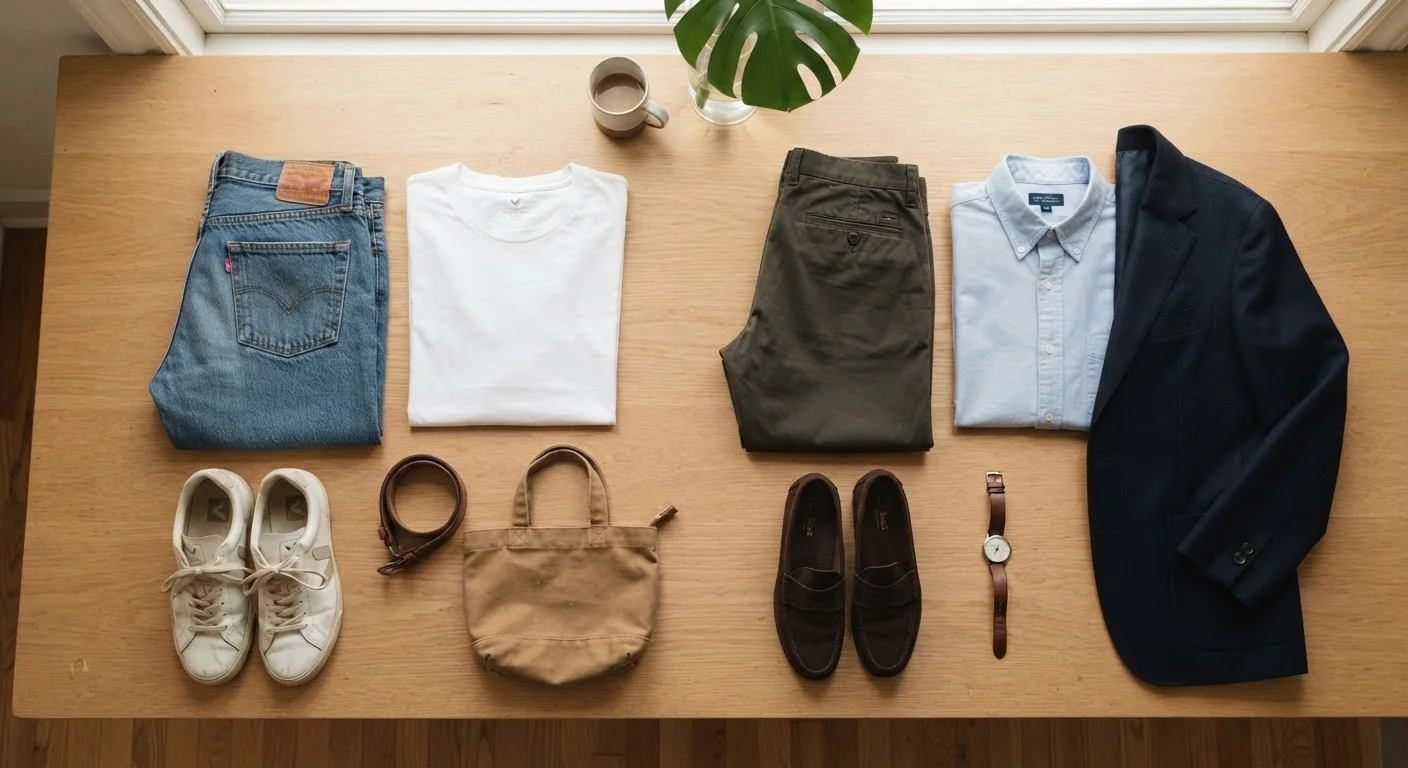
Photo: InDepthReads.com | Streamlining Learning For All editorial
Key Takeaways
- Casual prioritizes comfort and ease; smart-casual adds intentional polish without going formal.
- Fabric choice and fit are the fastest signals separating the two dress codes.
- Smart-casual doesn't require a full wardrobe overhaul — a few elevated basics go a long way.
- Context matters: the same outfit can read casual in one setting and smart-casual in another.
- Accessories and footwear are often what tips an outfit from one category to the other.
What Makes Casual Actually Casual?
Casual dressing is exactly what it sounds like: clothing you reach for without much deliberation. Think well-worn jeans, graphic tees, hoodies, sneakers, and anything that prioritizes comfort over impression management. The defining quality isn't sloppiness — casual can absolutely be clean and put-together — it's the absence of deliberate formality signals.
Casual outfits typically feature relaxed silhouettes, soft or stretchy fabrics, and minimal structure. A cotton crewneck, pull-on joggers, or canvas slip-ons all fit squarely in this category. Casual dressing is best suited to settings where no one is reading your outfit as a social cue — grocery runs, backyard get-togethers, lazy Sundays.
That said, even casual has a baseline. Clothes that are visibly worn, ill-fitting, or stained shift from casual into unkempt territory. A neat, relaxed outfit says "I'm comfortable"; a careless one just says "I didn't try." The distinction matters even when the dress code doesn't. For a deeper look at how to build a flexible casual wardrobe, see our guide to building your wardrobe from scratch.
Defining Smart-Casual: Effort Without Formality
Smart-casual is where most of the confusion lives — and understandably so. The term suggests two things that feel like opposites: smart (polished, intentional) and casual (relaxed, effortless). In practice, it means clothes that look considered without crossing into business or formal territory.
The signals that elevate an outfit into smart-casual are surprisingly specific: tailored or semi-structured fit, cleaner fabric choices (think chinos over sweatpants, or a linen shirt over a graphic tee), and footwear with a little more intention behind it — loafers, leather sneakers, or ankle boots rather than athletic trainers. A blazer thrown over a simple outfit is arguably the most efficient smart-casual move in the wardrobe.
| Criterion | Casual | Smart-Casual |
|---|---|---|
| Primary goal | Comfort and ease | Polished but approachable |
| Typical fabrics | Jersey, fleece, soft cotton | Linen, cotton-twill, ponte |
| Fit style | Relaxed, flexible | Tailored or semi-structured |
| Footwear | Sneakers, sandals, slip-ons | Loafers, leather sneakers, boots |
| Typical occasions | Errands, casual hangouts | Casual offices, dinners, events |
| Accessories | Optional, minimal | Add deliberate polish |
| Social signal | "I'm comfortable here" | "I made an effort" |
Crucially, smart-casual doesn't mean stuffy. Dark jeans in good condition, a tucked-in button-down, and clean leather shoes can absolutely qualify. The key is that each item looks like it was chosen — not just grabbed.
The Details That Separate Them
Most people already own pieces from both categories. The challenge is knowing which combination lands where. A few practical rules of thumb:
- Fabric: Structured fabrics (cotton-twill, linen, ponte) read smarter; jersey, fleece, and heavily distressed denim read casual. For a full breakdown of what different materials communicate, our clothing fabric guide is a useful reference.
- Fit: Intentional fit — not necessarily tight, just not shapeless — pushes an outfit toward smart-casual. Oversized pieces that are styled deliberately can still work; oversized pieces that look accidental read as purely casual.
- Footwear: Sneakers sit on the cusp. Clean, minimal leather sneakers can carry a smart-casual look; chunky athletic trainers tip it back to casual.
- Accessories: A structured bag, a simple watch, or a belt adds quiet intentionality. See our guide to accessorizing without overthinking it for practical ideas without the overwhelm.
~65%
Workers in flexible dress code environments
Various workplace surveys suggest roughly two-thirds of U.S. office workers now operate under a casual or smart-casual dress policy rather than formal business attire.
3–5 items
Pieces needed to shift casual to smart-casual
Style educators commonly suggest that just a handful of elevated basics — a blazer, tailored trousers, clean leather shoes — are enough to adapt a casual wardrobe for smarter occasions.
Neither dress code requires a large wardrobe. It's more about understanding the signals your clothes send — and choosing them with a little awareness.
Navigating Real-World Situations
The most useful way to apply this distinction is to think about the gap between your outfit and the occasion. Dressing too far below the occasion's expectations reads as dismissive; dressing far above it can feel uncomfortable or out of place. Smart-casual is designed to close that gap across the widest range of modern situations.
Common real-world scenarios and where they land:
- Casual Fridays at a relaxed workplace: Smart-casual. Clean jeans, a neat top, tidy shoes. Not sweatpants.
- A casual dinner with friends at a sit-down restaurant: Smart-casual is never wrong here; casual works if the venue is genuinely informal.
- Running weekend errands: Casual. No one expects otherwise.
- A networking mixer or informal professional event: Smart-casual, confidently. It signals engagement without the stiffness of business formal.
When in genuine doubt, erring toward smart-casual is rarely a mistake. It's the most socially forgiving zone in everyday dressing. For a broader framework on building outfits that adapt to your real life, the Everyday Style Playbook is worth a read.
Dress Codes Are Contextual, Not Universal
The content on this site is for informational purposes only and is not a substitute for professional advice. Always consult a qualified professional for guidance specific to your situation.