
In-Store Sales vs. Online Promotions: How the Savings Mechanics Differ

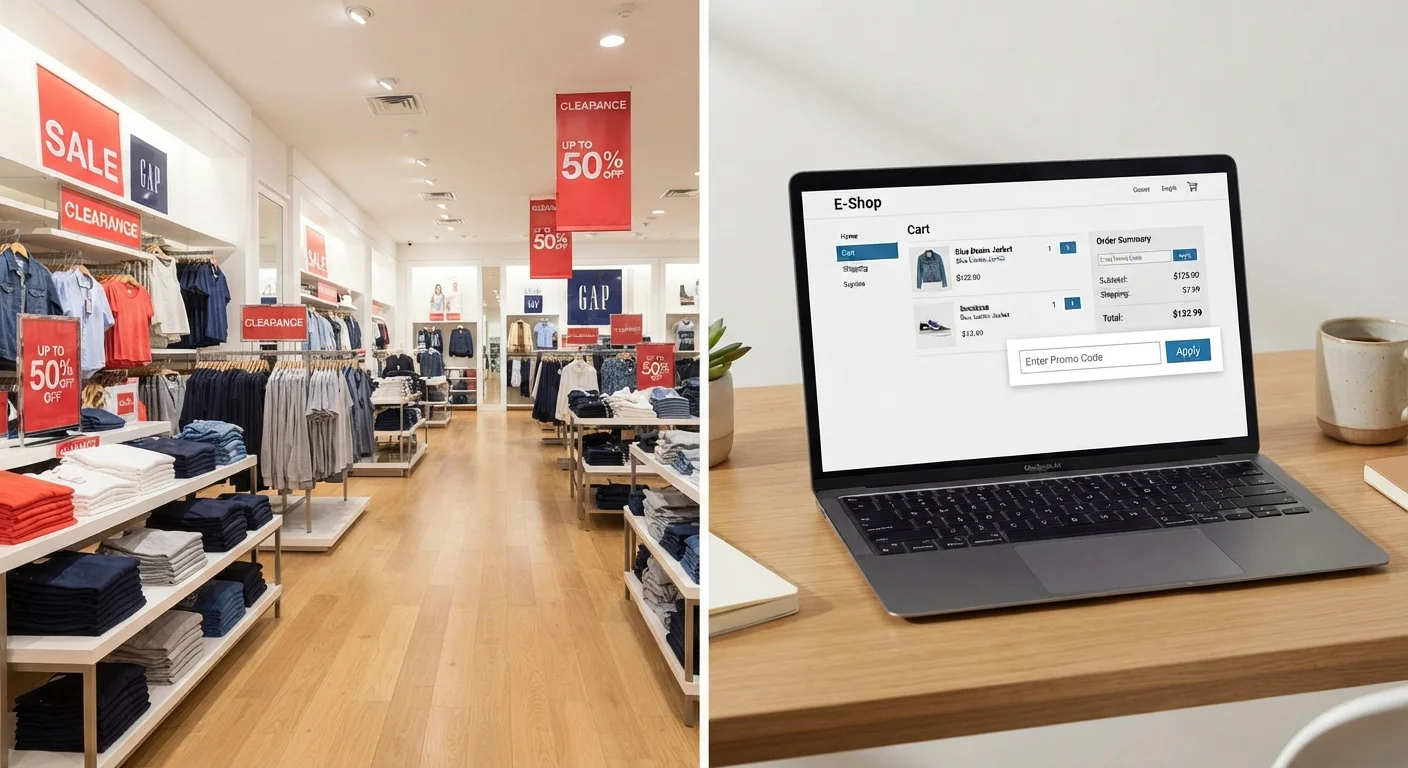
Photo: InDepthReads.com | Streamlining Learning For All editorial
Key Takeaways
- In-store sales are often driven by inventory clearance and floor-space needs; online promotions are frequently algorithmic or event-triggered.
- Online prices can change multiple times per day through dynamic pricing, while in-store shelf prices are typically fixed until a new tag is printed.
- Stacking discounts is generally easier online, where multiple promo codes, cashback, and portal rebates can often apply simultaneously.
- In-store shopping offers price-match leverage and immediate physical inspection that online channels cannot replicate.
- Neither channel is universally cheaper — the better deal depends on the product category, timing, and how each channel structures its promotions.
How In-Store Sales Are Structured
Physical retail markdowns typically fall into three categories: planned promotional events (holiday weekends, seasonal transitions), manager-authorized clearance, and loss-leader pricing designed to pull shoppers through the door on certain items while maintaining margins on the rest of the basket.
Clearance is arguably the most predictable in-store discount. Retailers need shelf space, and once a product misses its sell-through target, systematic markdowns follow — often 25%, then 50%, then 75% off original ticketed price. Understanding that cycle helps shoppers identify when a price drop reflects a genuine inventory exit rather than a cosmetic promotion. For a closer look at how these patterns unfold, see how retail markdown cycles actually work.
Loss-leader items are a different animal. A store may price a high-traffic item below cost to generate foot traffic, banking on the shopper adding full-margin items to the cart. Recognizing loss-leaders means you can take the deal without letting the surrounding marketing push you toward unplanned purchases.
Ask About Price Matching In-Store
In-store promotions also create one opportunity online shopping largely can't replicate: real-time price negotiation. Floor associates at many retailers — especially for appliances, electronics, and furniture — have some authority to match competitor prices or adjust for visible defects. Asking doesn't guarantee anything, but it costs nothing.
How Online Promotions Are Structured
E-commerce promotions operate through a wider toolkit: site-wide sale events, category-specific percentage discounts, promo codes, flash sales, loyalty point redemption, and cashback through affiliated portals. Unlike in-store signage, many of these can be layered — a topic worth exploring in detail through how stacking discounts actually works.
The most important mechanic to understand online is dynamic pricing. Large e-commerce platforms adjust prices algorithmically, sometimes multiple times per day, based on demand signals, competitor pricing, inventory levels, and even browsing history. A price you see Monday morning may be meaningfully different by Monday evening. Free browser extensions that track price history can help you distinguish a genuine dip from a momentary adjustment.
Watch for Inflated Reference Prices Online
Online promotional events — particularly major annual sale days — sometimes involve reference prices (the "was" price shown before the discount) that have been set or maintained at an artificially elevated level ahead of the event. This practice, sometimes called price anchoring, can make a discount appear larger than it is. Why sale prices don't always mean savings covers this mechanic in full.
Side-by-Side: How the Mechanics Compare
The table below maps the structural differences across the dimensions that matter most when deciding where to shop for a given purchase.
| In-Store Sales | Online Promotions | |
|---|---|---|
| Primary discount driver | Inventory clearance, seasonal events, loss-leaders | Algorithmic pricing, event sales, promo codes |
| Price stability | Fixed until shelf tag changes | Can change multiple times daily |
| Discount stacking | Limited; usually one offer at a time | Often stackable: codes, cashback, portals |
| Price negotiation | Possible with floor staff on select items | Rarely possible; bots set pricing |
| Transparency of reference price | Original tag often visible on shelf | "Was" price may be inflated pre-sale |
| Product inspection before purchase | Yes — physical handling available | No — relies on descriptions and reviews |
| Availability of price history tools | Not applicable | Browser extensions track price history |
Neither channel has a blanket advantage. The decision hinges on the product category and what type of discount mechanism is most likely to be in play. For example, predictable seasonal discount windows often play out differently in physical stores versus online — categories like mattresses or large appliances may see deeper in-store clearance, while electronics discounts tend to be sharpest online during high-traffic promotional events.
It's also worth checking common assumptions against the evidence. Many shoppers hold beliefs about loyalty programs and bulk discounts that don't hold up under scrutiny — common deal-hunting myths that cost shoppers money is a useful reality check before building a shopping strategy around either channel.
Practical Rules for Choosing the Right Channel
A few decision rules help cut through the noise:
- High-touch purchases (furniture, footwear, produce, appliances) benefit from in-store evaluation, where physical inspection eliminates fit or quality uncertainty — and potentially reduces the likelihood of a return. Speaking of which, the two channels handle returns differently too; how online and in-store returns differ is worth reviewing before you buy.
- Stackable-discount categories (clothing, electronics, household goods) favor online purchases when multiple promo codes, a cashback portal, and a credit card rewards category can apply to a single transaction.
- End-of-season or discontinued items are often most aggressively priced in physical clearance sections, where the retailer's incentive to free up floor space is most immediate.
- Time-sensitive needs eliminate the delivery wait, making in-store the default — but factor in whether the immediate availability justifies paying a higher shelf price.
Understanding how retailers use pricing tactics across both channels — from charm pricing to manufactured urgency — gives you a more complete picture. Retail pricing tactics every shopper should recognize covers the full landscape.
The content on this site is for informational purposes only and is not a substitute for professional advice. Always consult a qualified professional for guidance specific to your situation.